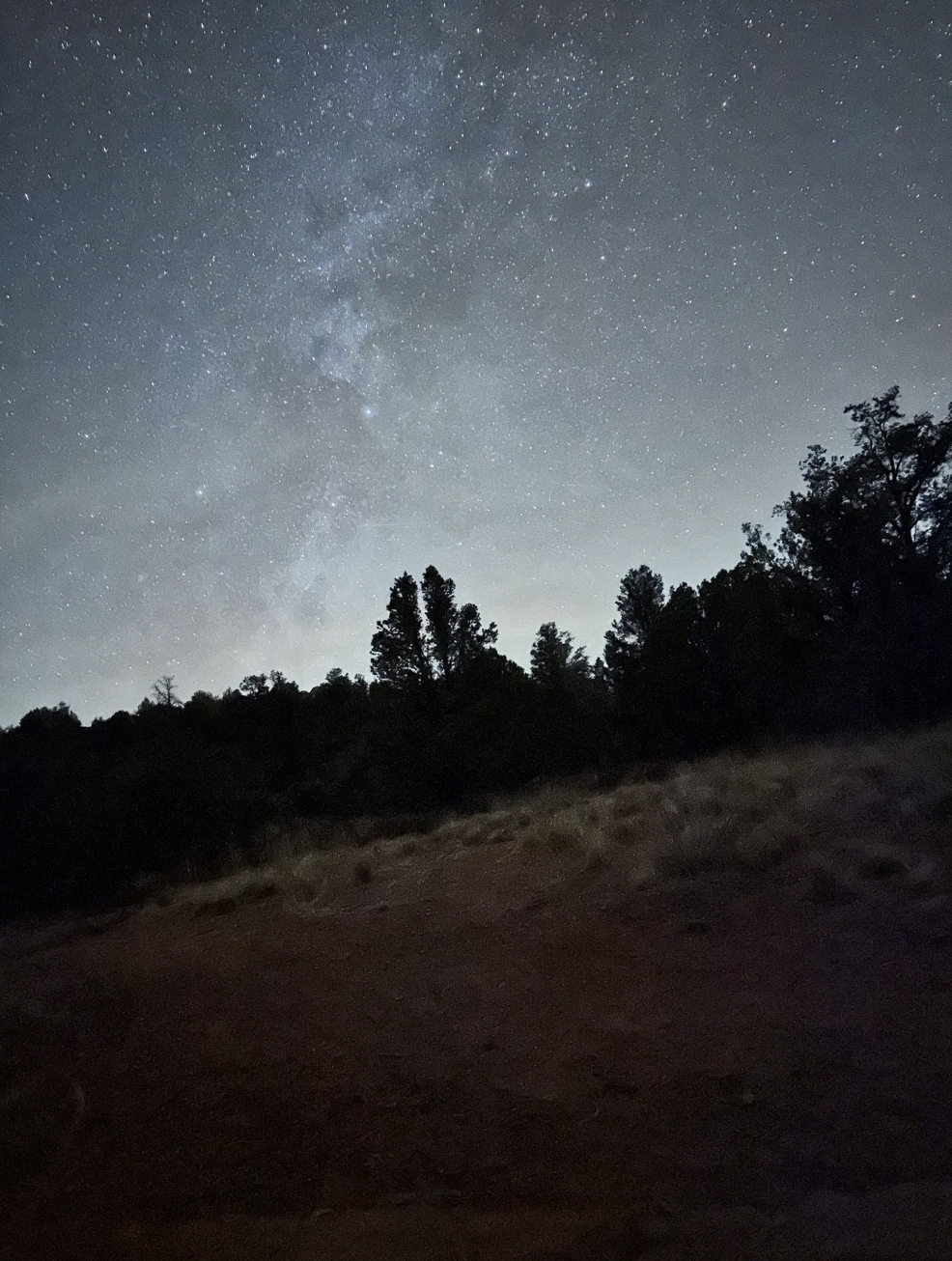
Winter milky way
Capturing the dim winter milky way is a challenge in many ways. The milky way in the winter is extremely dim and hard to see, so you are going to have to go a location far away from any light pollution. I went to Sedona, Arizona, and drove a bit out of the small town to reach a place with almost zero light pollution.
When taking a photo of the milky way timing is everything. First and foremost, I planned my trip to align with the new moon in December when the skies would be pitch black-all the better for viewing stars. My gear was nothing but an iPhone 14 Pro with Night Mode, and a few rocks I found on the spot to hold my phone steady. After that, I was ready to take some good winter milky way photos!
I am originally from California and when I first came to this place, I noticed the red rocks had lots of layers that were probably millions of years old. The days were spent hiking, exploring the more amazing views, gearing up for my photo. My spot was the Baldwin Trailhead, super dark clear skies, and amazing vibes.
As night fell, the stars started appearing one by one, filling the sky. I put my iPhone on a rock and used a smaller rock to hold it in place. I had night mode on, and I put the exposure time all the way up to 10 seconds, the max you can put it on by yourself. If it is really dark and you keep the iPhone extremely still at 10 seconds exposure, it will automatically go up to 30 seconds of exposure. I captured the winter Milky Way in all its glory, the rare winter arm showing clear across the sky.
But this photo is more than the photo, it reminds me how vast the universe is and how such moments will be remembered forever. And, well, if it ever comes into your hands, you really need to try it: shooting the Milky Way using your phone. Believe it, this shall be an adventure never to be forgotten.