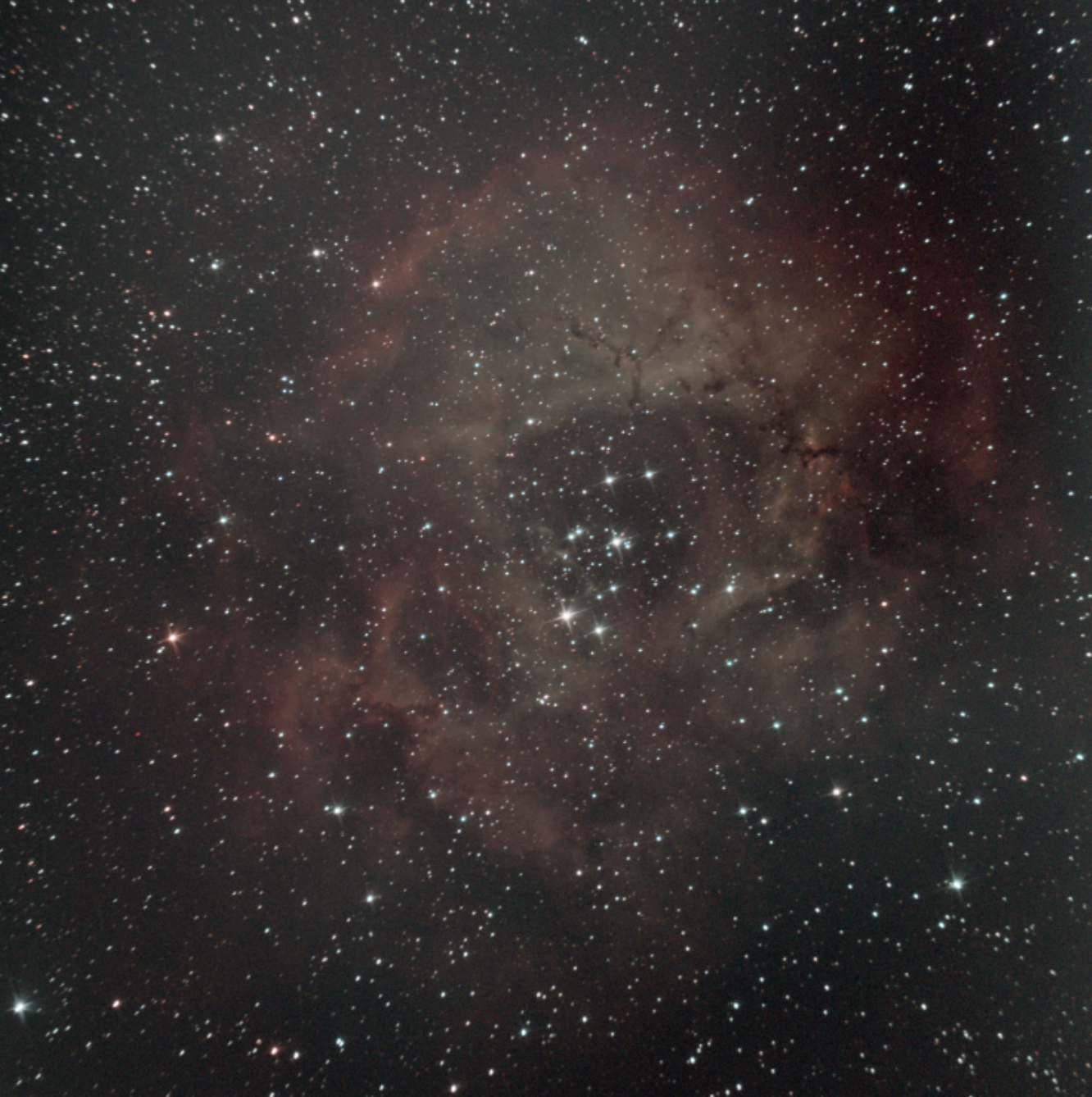
rosette nebula
Capturing the majestic Rosette Nebula from your backyard is a journey that combines patience, precision, and a touch of wonder. As a beginner astrophotographer, it is complicated to find my way around this hobby. The Rosette Nebula is a large, circular H II region in the constellation Monoceros. This is really a great object to observe and an excellent photo for astrophotography, especially for people who want to explore deep-sky objects. In this post, I will take you through my process of photographing this nebula.
The first thing I do to photograph the Rosette Nebula, you will need the right equipment. A telescope, a sturdy mount, and a DSLR or dedicated astronomy camera are what you will need. I used an 5 inch reflector telescope with a focal length of 650mm, which provided a good field of view to capture the nebula in all its glory. Additionally, a GoTo and tracking mount was quite important for accurate tracking and positioning, ensuring that the nebula remained in the frame during long exposures. I used the SkyWatcher HEQ-5 as this is a sturdy and reliable mount for astrophotography. My camera is a Nikon D750 with a good clip in light pollution filter.
After this I set up my equipment in my backyard, the city lights create light pollution and make it harder to take a good image. A light pollution filter cuts out most city lights and also enhanced the contrast and details of the nebula. With the mount polar aligned and calibrated, I then used a hand controller for locating the Rosette Nebula within the night sky.
To take photos of deep-sky objects, like the Rosette Nebula, patience is key. Long exposure times are required to gather enough light to reveal intricate details and vibrant colors of the nebula. I took a series of 2-minute exposures, totaling about 2 hours of exposure time. I don't have a autoguider to make tracking better, so 2 minutes is the longest exposure I can get without star trailing.
Of course, post-processing plays a big role in astrophotography. Once the images were shot, I aligned and combined them using Siril, a stacking software, which truly brought up the signal-to-noise ratio and brought out very subtle details in this nebula. Further image editing, adjusting background noise, light curves, and color, really made the striking red color of hydrogen gas pop. The final result was a great image from my standards, showing the beauty of the Rosette Nebula.